

Almost everyone will experience back pain at some point in their life. Back pain varies greatly from one person to the next. It can range from mild to severe, and can be short-lived or long-lasting.
Unfortunately, preventing all back pain may not be possible. We cannot avoid the normal wear and tear on our spines that goes along with aging. There are some things we can do at work and at home, however, to help reduce our risk for developing back problems. Having a healthy lifestyle is a good start to preventing back pain.
Exercise
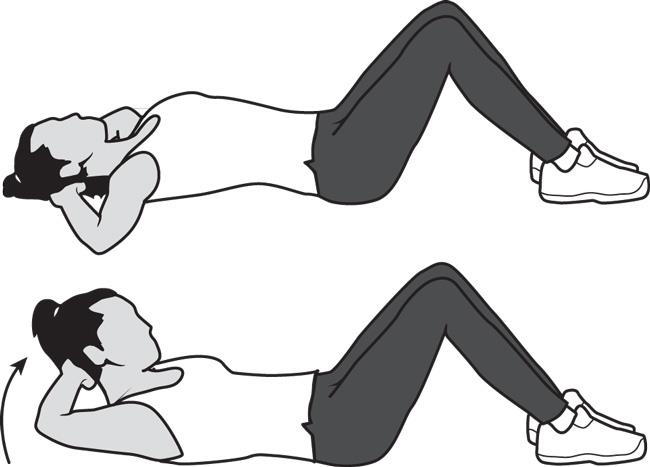
Combine exercise, like walking or swimming, with specific exercises to keep the core muscles in your back and abdomen strong and flexible. Strengthening your core muscles will help support your spine and can help prevent back pain.
Weight Loss
Maintain a healthy weight. Being overweight puts added pressure on your spine and lower back.
Avoid Smoking
Both smoke and nicotine can cause the flexible discs that lie in between the vertebrae in your spine to degenerate, or wear out, faster than normal.
Proper Posture
Having good posture is important in avoiding low back problems. The way you stand, sit, and lift things has an impact on your spine health.
Picking Up a Light Object
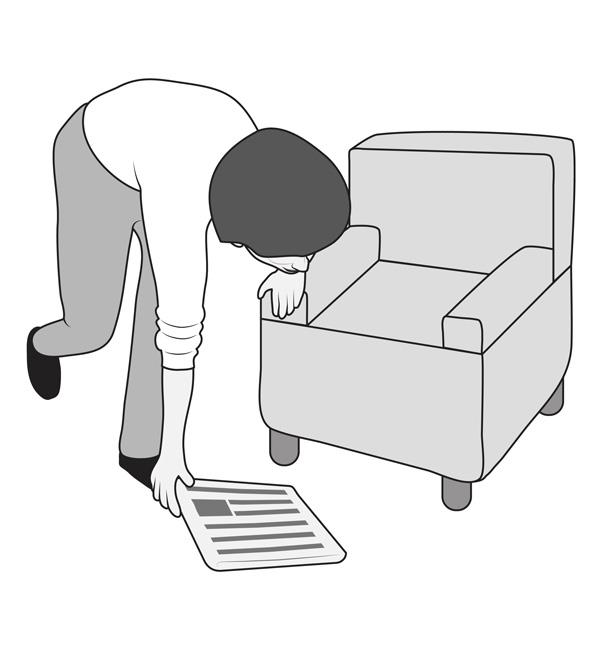
To lift a very light object from the floor, such as a piece of paper, lean over the object, slightly bend one knee and extend the other leg behind you. Hold on to a nearby chair or table for support as you reach down to grab the object.
Picking Up a Heavy Object
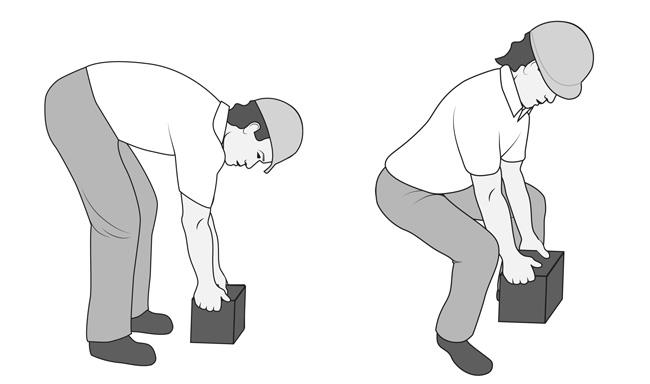
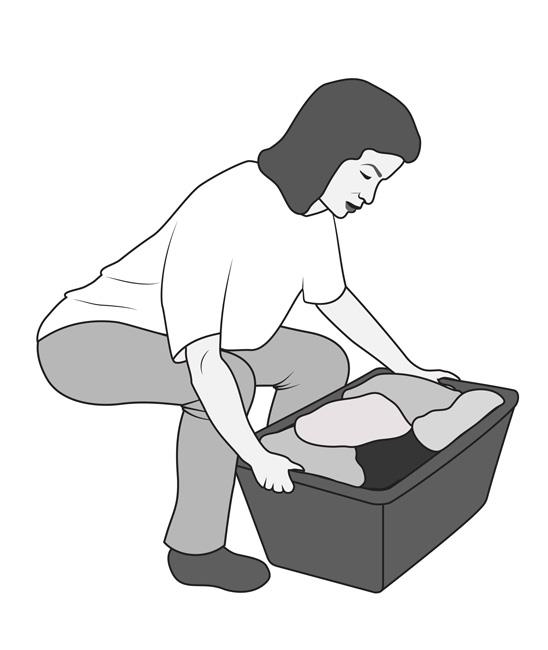
Whether you are lifting a heavy laundry basket or a heavy box in your garage, remember to get close to the object, bend at the knees, and lift with your leg muscles. Do not bend at your waist.
When lifting luggage, stand alongside the luggage, bend at your knees, grasp the handle and straighten up.
Holding an Object
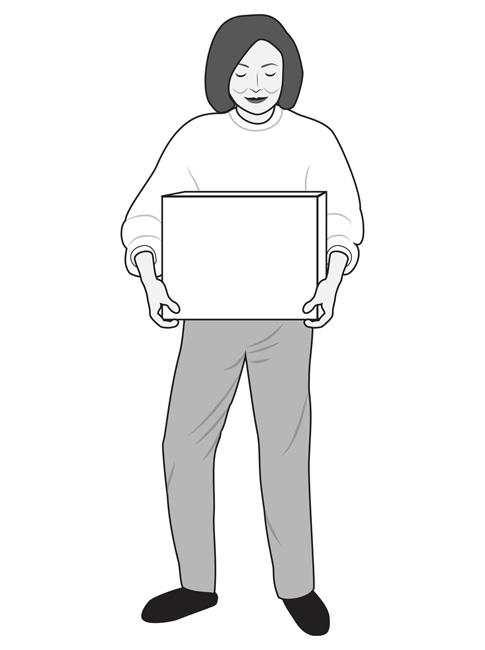
While you are holding the object, keep your knees slightly bent to maintain your balance. If you have to move the object to one side, avoid twisting your body. Point your toes in the direction you want to move and pivot in that direction. Keep the object close to you when moving.
Placing an Object on a Shelf
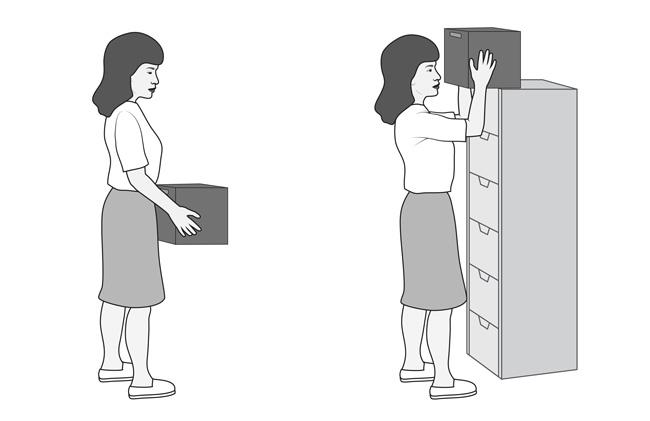
If you need to place an object on a shelf, move as close as possible to the shelf. Spread your feet in a wide stance, positioning one foot in front of the other to give you a solid base of support. Do not lean forward and do not fully extend your arms while holding the object in your hands.
If the shelf is chest high, move close to the shelf and place your feet apart and one foot forward. Lift the object chest high, keep your elbows at your side and position your hands so you can push the object up and on to the shelf. Remember to tighten your stomach muscles before lifting.
STAYING HEALTHY
Preventing Back Pain at Work and at Home
Almost everyone will experience back pain at some point in their life. Back pain varies greatly from one person to the next. It can range from mild to severe, and can be short-lived or long-lasting.
Unfortunately, preventing all back pain may not be possible. We cannot avoid the normal wear and tear on our spines that goes along with aging. There are some things we can do at work and at home, however, to help reduce our risk for developing back problems.
Guidelines for Protecting Your Back
Having a healthy lifestyle is a good start to preventing back pain.
Exercise
Combine exercise, like walking or swimming, with specific exercises to keep the core muscles in your back and abdomen strong and flexible. Strengthening your core muscles will help support your spine and can help prevent back pain.
Weight Loss
Maintain a healthy weight. Being overweight puts added pressure on your spine and lower back.
Avoid Smoking
Both smoke and nicotine can cause the flexible discs that lie in between the vertebrae in your spine to degenerate, or wear out, faster than normal.
Proper Posture
Having good posture is important in avoiding low back problems. The way you stand, sit, and lift things has an impact on your spine health.
Guidelines for Proper Lifting
Picking Up a Light Object
To lift a very light object from the floor, such as a piece of paper, lean over the object, slightly bend one knee and extend the other leg behind you. Hold on to a nearby chair or table for support as you reach down to grab the object.
Picking Up a Heavy Object
Whether you are lifting a heavy laundry basket or a heavy box in your garage, remember to get close to the object, bend at the knees, and lift with your leg muscles. Do not bend at your waist.
When lifting luggage, stand alongside the luggage, bend at your knees, grasp the handle and straighten up.
Holding an Object
While you are holding the object, keep your knees slightly bent to maintain your balance. If you have to move the object to one side, avoid twisting your body. Point your toes in the direction you want to move and pivot in that direction. Keep the object close to you when moving.
Placing an Object on a Shelf
If you need to place an object on a shelf, move as close as possible to the shelf. Spread your feet in a wide stance, positioning one foot in front of the other to give you a solid base of support. Do not lean forward and do not fully extend your arms while holding the object in your hands.
If the shelf is chest high, move close to the shelf and place your feet apart and one foot forward. Lift the object chest high, keep your elbows at your side and position your hands so you can push the object up and on to the shelf. Remember to tighten your stomach muscles before lifting.
Supporting Your Back While Sitting
When sitting, keep your back in a normal, slightly arched position. Make sure your chair supports your lower back. Keep your head and shoulders erect. Make sure your working surface is at the proper height so you don't have to lean forward.
Once an hour, if possible, stand, and stretch. Place your hands on your lower back and gently arch backward.
There is no evidence that one brand or type of mattress is better than another; however, it is important to choose one with a good support system. How firm a mattress should be is a matter of personal preference and depends upon your own comfort level. If you wake up in the morning with back pain, it could be a sign that your mattress is not properly supporting your lower back and spine.
Comments
Post a Comment
Thanks for your comment.